Table of contents
In recent years, wildfires have left vast areas of land devastated, prompting a need for quick and efficient restoration. Modern mulchers have emerged as a groundbreaking solution for managing fire-damaged terrains, offering a way to accelerate recovery and improve land safety. Explore how these advanced machines are redefining post-fire management and why their efficiency matters for both the environment and the communities affected.
The role of mulchers post-fire
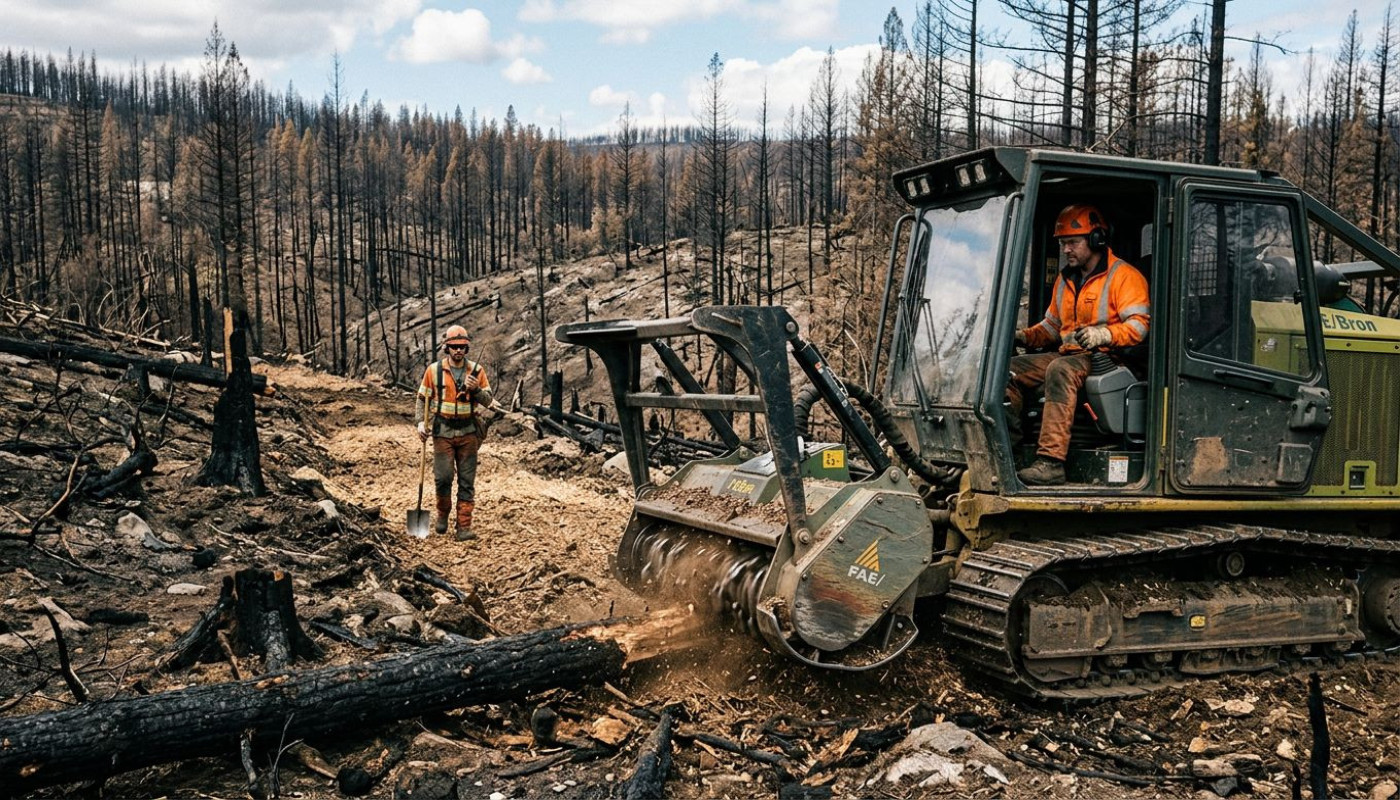
In the wake of wildfires, fire-damaged terrain presents a complex challenge for land stewards seeking rapid post-fire recovery and effective wildfire management. Modern mulchers are increasingly deployed as a first response, capitalizing on their impressive mulcher efficiency to convert vast expanses of charred vegetation and fallen debris into finely shredded biomass. This process, known as biomass conversion, is a pivotal step in ground preparation, as it transforms hazardous remnants into a protective layer of nutrient-rich mulch. By reducing large burnt materials into manageable particles, mulchers limit the risk of secondary fire outbreaks, suppress invasive species, and set the stage for soil rehabilitation and natural regeneration.
Advanced mulching equipment uses high-torque rotors and robust cutting assemblies, allowing swift processing even in the most rugged, fire-damaged terrain. As the machine moves through scorched landscapes, it distributes organic matter evenly, enhancing moisture retention and promoting the recovery of native plant species. In sum, mulcher efficiency plays a vital role in post-fire recovery, supporting both ecological stability and landowner objectives. For a detailed exploration of modern mulcher deployment and the science behind their effectiveness, consult an environmental restoration specialist with extensive field experience for the most accurate insights.
Advantages over traditional methods
Modern mulchers have significantly surpassed traditional land clearing techniques in wildfire restoration, offering marked improvements in speed, cost efficiency, and environmental benefits. Unlike manual removal or controlled burning, advanced mulchers deliver high operational throughput, clearing extensive fire-damaged areas in a fraction of the time. Cost efficiency stems from reduced labor requirements and minimized equipment downtime, making mulchers a preferred choice for large-scale projects. In terms of land clearing techniques, traditional methods like burning can lead to air quality degradation and unintentional spread of fire, while manual labor often disrupts soil structure and is labor-intensive. Modern mulchers, conversely, are engineered to minimize their ecological footprint by finely processing organic debris and allowing nutrient-rich mulch to reintegrate into the soil, supporting new vegetation growth and soil stabilization.
In real-world wildfire restoration projects, advanced mulchers have demonstrated substantial value. For instance, in regions of California affected by severe wildfires, deploying modern mulchers expedited debris removal, reduced environmental hazards, and facilitated safer, faster re-entry for recovery teams. Their precision and adaptability allow for efficient operation across a range of terrains, including steep or uneven landscapes where older methods struggle. These environmental benefits, combined with operational cost savings, underscore why wildfire recovery engineers increasingly advocate for the integration of modern mulchers in post-fire land management strategies. The transition toward these innovative land clearing techniques continues to reshape expectations for both restoration speed and ecological responsibility in fire-damaged zones.
Technical innovations driving efficiency
Modern mulcher technology has rapidly evolved to address the complex demands of operating in fire-damaged areas, where unpredictable terrain and hazardous conditions challenge traditional equipment. Equipment innovation in this sector now features advanced hydraulic powertrain systems, providing precise power delivery and torque control that allow mulchers to navigate uneven ground with better stability and responsiveness. Enhanced cutting mechanisms, such as high-strength, self-sharpening blades and variable-speed rotors, adapt to the density of charred vegetation and debris, promoting efficient biomass reduction while minimizing downtime caused by jams or mechanical failures. These advancements not only boost productivity but also extend the operational lifespan of the machinery, making them highly suitable for post-wildfire landscape restoration.
Remote operation is another transformative development in modern mulcher technology, enabling operators to control machines from a safe distance and reducing exposure to potentially hazardous environments. Self-leveling tracks further increase terrain adaptability, ensuring consistent ground contact and improving traction on slopes or unstable surfaces common in fire-damaged areas. Operator safety systems, such as rollover protection structures (ROPS) and real-time monitoring sensors, are integrated to provide comprehensive protection and immediate feedback on machine status. Collectively, these technical advancements represent a substantial leap forward in ensuring both the efficiency and safety of mulching operations in challenging post-fire conditions. For a comprehensive and technically sound exploration of these developments, the expertise of a forestry equipment development expert is highly recommended.
Environmental impact and land health
Mulching benefits fire recovery by accelerating ecosystem restoration in fire-damaged terrains. When wildfires devastate landscapes, exposed soils become highly vulnerable to erosion from wind and water. Applying mulch creates a protective layer that significantly improves erosion control and helps maintain soil health by reducing runoff and sediment loss. This protective cover is also vital for retaining soil moisture, which supports the germination and growth of native vegetation, leading to a more resilient habitat. The resurgence of native plants is essential for restoring food webs and stabilizing ecosystem functions after a wildfire event.
In ecosystem restoration, mulching enhances habitat resilience by suppressing the growth of invasive species and encouraging the re-establishment of local flora. Retained soil moisture under mulch enables native seeds to sprout more successfully, promoting biodiversity and accelerating the recovery of plant communities. As vegetation cover increases, it further reduces erosion risk and helps rebuild wildlife habitats, making mulching a pivotal practice in land rehabilitation strategies for fire-impacted areas across diverse landscapes.
Despite these advantages, there are specific challenges associated with mulching in sensitive habitats. For example, excessive mulch thickness can smother emerging seedlings or alter soil temperature, affecting natural regeneration cycles. In certain ecosystems, inappropriate mulch materials may introduce foreign substances or pathogens, complicating fire recovery efforts. Site-specific considerations are vital to optimize mulching techniques for maximum ecosystem benefits while safeguarding soil health and native vegetation integrity. Balancing these factors ensures that mulching remains an effective tool for long-term restoration and erosion control.
Land rehabilitation ecologists recommend consulting reputable sources and equipment suppliers to select the most suitable mulching approaches for fire-damaged terrains. For comprehensive information and to explore modern mulching solutions tailored to ecosystem restoration, visit the official site. Selecting appropriate machinery and methods plays a key role in protecting sensitive habitats and enabling successful fire recovery outcomes.
Future outlook for fire recovery mulchers
The future of mulching in wildfire response is poised for transformative advancements, with a strong focus on intelligent equipment and integrated technologies. As predictive analytics becomes increasingly accessible, mulchers are expected to operate with greater precision, targeting high-risk areas and optimizing debris removal. Digital monitoring platforms will likely play a central role, enabling real-time data collection on soil health, vegetation regrowth, and equipment performance. These improvements will allow land managers to craft highly adaptive post-fire strategies, ensuring that interventions are both timely and effective.
Machine autonomy is set to redefine the capabilities of fire recovery mulchers. Autonomous equipment could navigate fire-damaged terrains with minimal human oversight, reducing risks for operators and increasing operational efficiency. Advanced sensors and GPS mapping will facilitate obstacle detection and route optimization, while integration with satellite imagery and drones may provide comprehensive situational awareness. This synergy between autonomous field machinery and digital monitoring systems is anticipated to streamline restoration efforts across large, inaccessible, or hazardous landscapes.
Looking ahead, the future of mulching in wildfire recovery is expected to prioritize sustainability and resilience. Developments in machine learning and remote diagnostics will enable fire response teams to deploy resources based on real-time needs rather than fixed schedules. Such innovations promise to accelerate ecosystem recovery, minimize erosion, and support more effective reforestation. As the role of mulchers evolves within broader post-fire strategies, continuous research and investment in autonomous technology and digital integration will be vital. An in-depth exploration of these trends and their implications for land rehabilitation would be well served by a wildfire technology analyst with expertise in predictive analytics and machine autonomy.
On the same subject
.jpg)
Why are rainwater chains so famous in Europe?

Heirloom seeds vs hybrid what's best for your sustainable garden

Year-round blooms planning a garden for continuous color
